
How Small Businesses Can Use QR Codes to Increase Sales
Not a list of 40 ideas. Five plays that show up in the till: more reviews, more repeat visits, a list you can message, a catalogue that is never out of date, and followers who already bought from you.


QR Junction Team
We build QR tools that restaurants actually print and use.
The shop next door sells the same thing. Ads are expensive. A QR code is cheap only if you use it for a job that makes money — not as decoration on the shutter.
This is the sales-focused version. If you want the long menu of ten operational uses (WiFi, payments, events), use the practical small-business QR guide. Here we stay on five plays that feed reviews, repeats, and a list.
Offline marketing QR codes
Offline marketing QR codes are the square on a bag, a window, a bill, a table tent — not an Instagram bio. The paper has no analytics until the code is dynamic and unique per placement. Flyers, posters, and size charts get their own print guide later. This page is the sales job: reviews, offers, leads, catalogue, follow.
1. Get more Google reviews (they turn into walk-ins)
People check Maps before they enter. More recent reviews, higher rank, more strangers. Happy customers still do not leave a review because searching your name is work.
Put a Google review QR code on the bill, the exit, the bag. Direct form, not the listing. One scan. For restaurants, keep this off the menu tent so you do not mix jobs.
2. Share a next-purchase offer
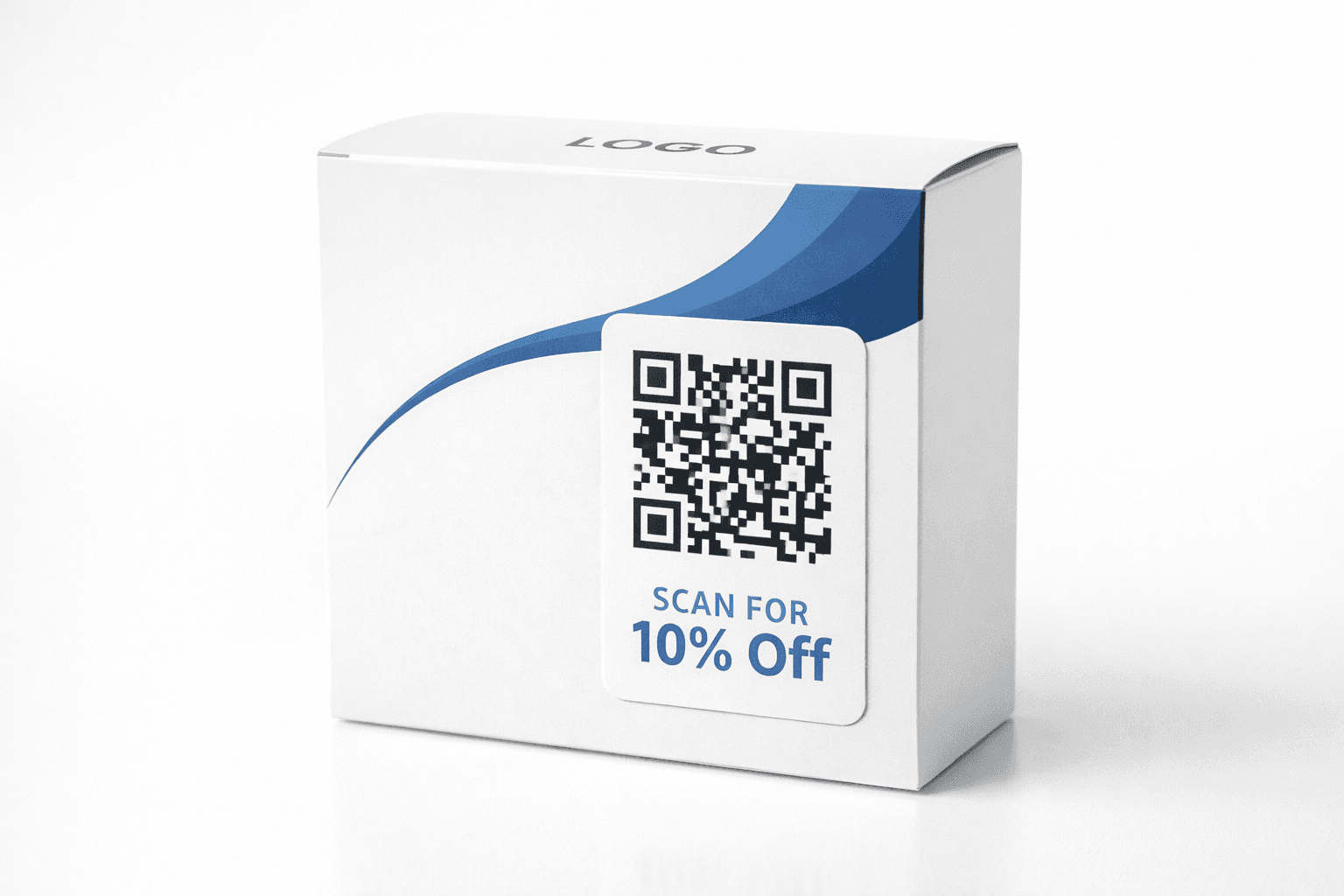
A coupon on thermal paper dies in a wallet. A QR on the bag that opens this week’s code still works if you change the page behind it.
That only works with a dynamic QR. Static means you reprint when the 10% becomes a festival hamper. Repeat purchases beat hunting new customers. This is the boring version of “loyalty”.
3. Collect leads before they walk out
Most counters have zero way to talk to a browser who did not buy. A QR to a short form — name, WhatsApp — in exchange for early access or a first-order discount is a list. Message that list. Stop paying to shout at strangers.
QR Junction landing pages include a lead form if you do not want to wire Google Forms. Keep the form to three fields. Long forms die on a phone in a doorway.
4. Show a live catalogue (or a real menu)
Printed catalogues expire. One QR to a page you edit is cheaper than a reprint. Clothing: lookbook. Salon: service list with GST-clear prices. Food: a QR code menu, not a photo of the laminated card.
5. Turn buyers into a following
They already like you. Asking them to “search the handle” leaks half of them. Instagram QR on packaging. WhatsApp QR on the counter for orders. Specific CTA: “Scan for this week’s drop”, not “follow us”.
- Instagram — warm followers who have touched the product.
- WhatsApp — orders and “is this in stock?” without a missed call.
- Facebook / YouTube — only if you actually post there.
If you cannot see the scan, you cannot see the sale
Same offer, different codes for bag vs counter vs window. Then track QR code scans. Kill the placement that never moves. That is how a square becomes a sales tool instead of a sticker.
Start with one play
Reviews on the bill. Or an offer on the bag. Or a WhatsApp chat on the tray. Ship one this week. Add the second when you can see the first working.
Frequently asked questions
What are offline marketing QR codes?
Offline marketing QR codes sit on print: bills, bags, windows, tents. Dynamic if the offer will move. One code per placement if you want to know which object sold. A static PNG on a flyer cannot grow a dashboard later.
Can QR codes really increase sales for a small shop?
Indirectly, yes: more Google reviews, easier reorders on WhatsApp, a list you can message, and offers you can change without reprinting. The square does not sell. The destination does.
What is the first QR code a shop should print?
A Google review QR on the receipt if you care about Maps, or a WhatsApp QR on the counter if most orders already happen in chat.
Should sales QRs be static or dynamic?
Dynamic for anything you print in quantity. Offers, catalogues, and review links change. Static is fine for a payment QR whose UPI ID never moves.
Related guides
QR Codes for Small Businesses: 10 Uses That Actually Work
You already have counters, bags, and walls. Ten ways to turn those into a review, a menu, a chat, a WiFi join, or a number you can trust — without a marketing team.
How to Create a Google Review QR Code for Your Business
Happy customers mean to review you. They do not. A QR on the bill opens the form while they still care.
QR Code Scan Tracking: How to Track QR Code Scans (And Stop Guessing Which Poster Worked)
If the code encodes the website itself, Google Analytics will call every scan Direct. Tracking only exists when the square hits a short link you control first.
Create a QR code for your shop
Create custom vector patterns, integrate dynamic redirection endpoints, and view details.